
Why Vegan Burger Patties Fall Apart (and What Makes Them Hold)
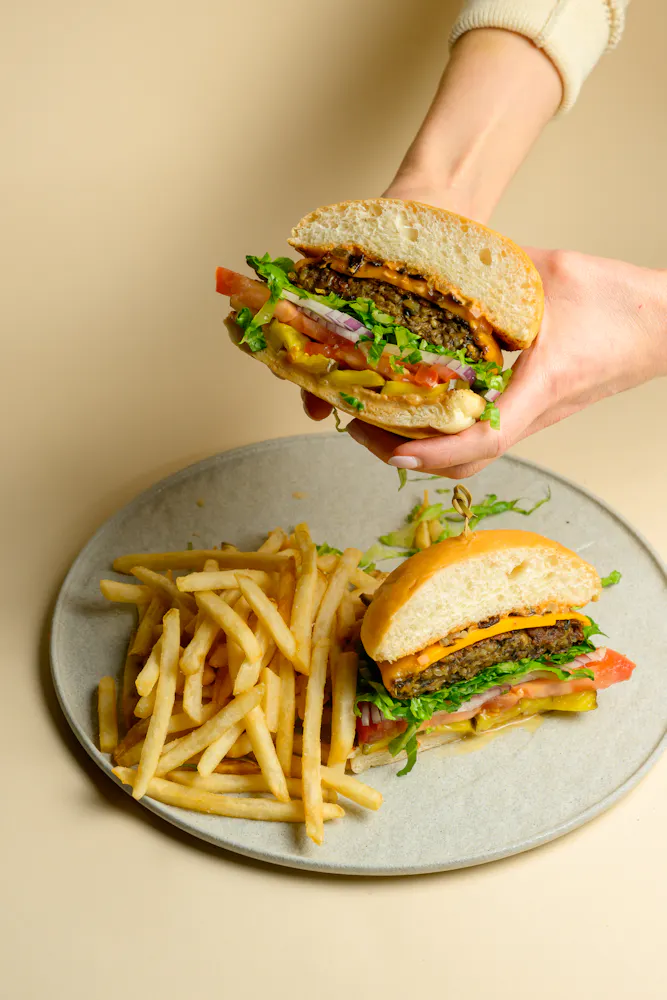
A patty with commitment issues will announce itself by bite two. A good vegan burger patty holds together because its ingredients have been prepared to do different jobs: some provide structure, some retain moisture, and some bring chew. Too much water, too little binding, or trying to flip it before the crust forms can all turn a promising burger into something best eaten with a spoon.
The useful distinction is between a patty that crumbles and one that turns into mash. They look equally undignified on a bun, but they need different fixes.
Start With the Texture Problem
If the Patty Crumbles
A dry, loosely packed mixture may not have enough ingredients holding the pieces together. Whole beans and grains are good for texture, but they need something connecting them. Partly mashing the beans creates a softer base that can carry the more intact pieces. Depending on the recipe, oats or another suitable binder can help. A little moisture may also be necessary if the mixture is genuinely dry.
If the Patty Is Mushy
More binder is not always the answer. A wet mixture can remain soft in the center even after its exterior starts to brown. Start by draining cooked legumes well and cooking down moisture-rich vegetables. The goal is a mixture that can be shaped without feeling like a bowl of soup.
Give the Ingredients Different Jobs
Mushrooms and black beans bring savory depth; grains and lentils give a patty some chew. But ingredients that contribute flavor do not automatically supply structure. Think of the mixture as a team rather than a list of interchangeable vegetables.
Our house-made PLANTA Burger is an example of that approach. The patty begins with grains, lentils, black beans and mushrooms. The grains and legumes are cooked and rested overnight; the mushrooms are roasted separately before the mixture is brought together. You can read more about the house-made PLANTA Burger and its build.
Roast the Mushrooms Before They Meet the Beans
Water is the quiet troublemaker here. Roasting mushrooms separately concentrates their flavor and helps manage the moisture before they join the mixture. That means the patty can brown instead of steaming. For more on that technique, explore our guide to mushrooms in plant-based cooking.
In a black bean patty, the same principle can apply to the beans themselves. Serious Eats illustrates how partially drying cooked beans can help retain a more distinct texture rather than a uniform paste.
Keep Some Texture in the Mix
A mixture blended until completely smooth can lose the little moments of chew that make a patty interesting. Leave some of the grains or beans recognizable while using a softer base to bind them. The aim is cohesion, not a vegetable purée in the shape of a burger.
Rest, Shape, Then Sear
Once everything comes together, our patties are formed by hand and rested again before cooking. That second rest gives the mixture time to settle. At home, a recipe's chilling or resting step can serve a similar structural purpose; follow its directions rather than treating resting as optional.
Shape the patty evenly and press it just enough to hold together. A thick center can be harder to heat through without overcooking the outside. When the surface meets a properly heated cooking surface, leave it long enough to develop a crust before trying to turn it.
Crust first, mush never. A proper sear delivers a darker, savory edge, while the middle still needs some give. Too damp and you get steam. Too dry and the patty exits the bun in pieces. Neither problem is solved by another slice of cheddar.
Three Checks Before You Call It a Burger
The Shape Check
Can the patty hold its shape before cooking? If not, revisit how wet or dry the mixture is and whether its ingredients are binding.
The Flip Check
Does it release once the underside has set, or does the surface tear away? Give the crust time to form rather than moving it repeatedly.
The Bite Check
Does the middle offer some chew without collapsing? A cohesive patty should still have texture. If every bite feels like paste, adjust the mixture and preparation next time rather than simply cooking the exterior darker.
Frequently Asked Questions
Why do vegan burger patties fall apart?
Common reasons include insufficient binding, a mixture that is too wet or dry, and moving the patty before its surface sets. Identify whether the patty is crumbling or mushy before deciding what to change.
What binds a vegan burger patty?
Partly mashed beans, oats, breadcrumbs or other recipe-appropriate plant-based binders can help hold the mixture together. The right choice depends on the moisture and ingredients already present.
Why rest vegan burger patties before cooking?
Resting or chilling can help some mixtures firm up and give binders time to absorb moisture. Follow the recipe's instructions; different styles of plant-based patties behave differently.
Does a vegan burger have to imitate beef?
No. A bean, mushroom or grain-based patty can have its own savory flavor and texture. The goal is a satisfying bite, not a perfect imitation.
Give the Patty a Fighting Chance
A little kitchen patience can make the difference between a tender burger and a crumble. For an example of how we build a plant-based cheeseburger, explore the PLANTA Burger story. Check your local PLANTA menu before visiting, since offerings vary by location.